You lie down on a mat, someone hands you a blanket, and then a wall of low, resonant tones washes over the room for the next hour. If that sounds strange, you're not alone in wondering what a sound bath is before trying one for the first time. It's become one of the most talked-about wellness experiences in Medellín, and it's a lot less mysterious once you know what's actually happening.
What Is a Sound Bath, Exactly?
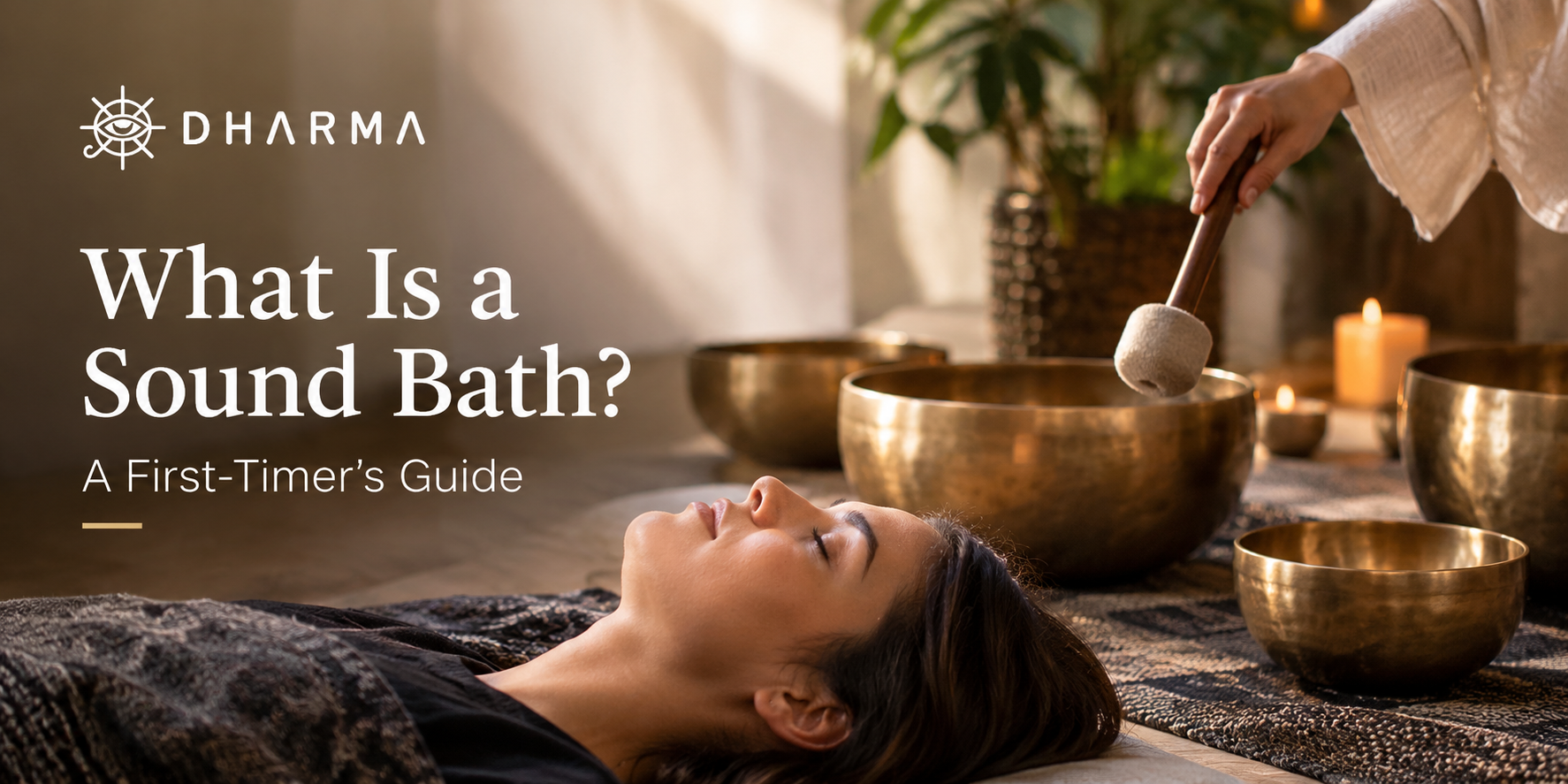
A sound bath is a guided listening experience where a practitioner plays instruments like singing bowls, gongs, chimes, or tuning forks while you lie down with your eyes closed. There's no chanting or movement required from you. You simply lie still and let the sound wash over you for 45 minutes to an hour.
The name comes from the sensation of being immersed, or bathed, in sound rather than actively listening to music. Unlike a concert, there's no melody to follow. It's closer to ambient noise designed specifically to help your nervous system slow down.
Sound Bath vs. Sound Healing: What's the Difference?
People often ask what the difference is between a sound bath and sound healing, and the honest answer is that the terms overlap more than they differ. A sound bath usually refers to the group or individual listening experience described above. Sound healing is the broader umbrella term, which can include sound baths but also more targeted, one-on-one sessions using specific frequencies aimed at particular areas of tension.
In practice, if you book a sound healing session in Medellin, there's a good chance it will look and feel exactly like a sound bath. The distinction matters more to practitioners describing their specialty than to you as a first-time participant. If you're weighing this against something more clinical, it helps to see how it compares to IV therapy in Medellin before deciding which to try first.
What Instruments Are Used?
Crystal and metal singing bowls are the most common, each producing a different tone depending on their size and material. Gongs add a deeper, more physical vibration you can sometimes feel in your chest. Tuning forks are used more precisely, often placed near specific parts of the body. Some practitioners also use chimes, rain sticks, or their own voice through toning or chanting, layering different textures throughout a session.
You don't need to know anything about these instruments beforehand. Part of the experience is simply not knowing what sound is coming next.
What Does a Sound Bath Actually Feel Like?
This is the part most first-timers are curious about. Physically, you'll likely feel a mix of relaxation and mild vibration, especially from lower-frequency instruments like gongs. Some people describe a tingling sensation, and others feel almost nothing physical at all beyond deep calm.
It's completely normal to fall asleep partway through, and practitioners expect it rather than take it as a sign you're not doing it right. Some people get emotional during a session, which is also considered normal. If that happens, most facilitators will simply let it happen rather than interrupt you.
Sound bath meditation works well specifically because there's nothing to actively do. You're not trying to clear your mind through effort, the way some meditation styles ask you to. You're just there, letting the sound do the work.
How Long Does a Session Last, and What Should You Expect?
Most sessions run 45 minutes to an hour, sometimes longer for a fully immersive group event. Expect to be asked to remove your shoes, get comfortable on a mat or cushion with a blanket, and settle in before the practitioner begins. You'll usually stay lying down the entire time, and there's rarely any instruction beyond finding a comfortable position.
Afterward, you might feel a little groggy, similar to waking up from a nap, so it's worth giving yourself a few quiet minutes rather than rushing straight back into a busy day. Pricing varies by studio, session length, and whether it's a group or private booking, so it's worth comparing current session costs before you commit to one place.
Where to Experience a Sound Bath in Medellin
Sound healing has become genuinely easy to find across neighborhoods like El Poblado, Laureles, and Envigado, whether you're looking for a group event or a private session. The bigger challenge for travelers isn't availability; it's finding a practitioner who can actually explain what's happening in English, since a lot of the instruction happens verbally throughout the session. That's the exact gap an app like Dharma was built to close, listing only practitioners who've been checked for both real experience and English communication before they ever appear in search results.
If you're curious how this compares to other practices you might come across during your trip, this guide to energy healing in Medellin covers Reiki, tarot, and IV therapy alongside sound healing, so you can see how they stack up against each other. And if you want to understand how practitioners are actually screened before you book, it's worth reading about the vetting process behind any platform you use.
Ready to try one for yourself? You can browse English-speaking sound healing practitioners and claim 20 percent off your first session.